The Financial Standing of Tiger Woods: A Billion-Dollar Legacy
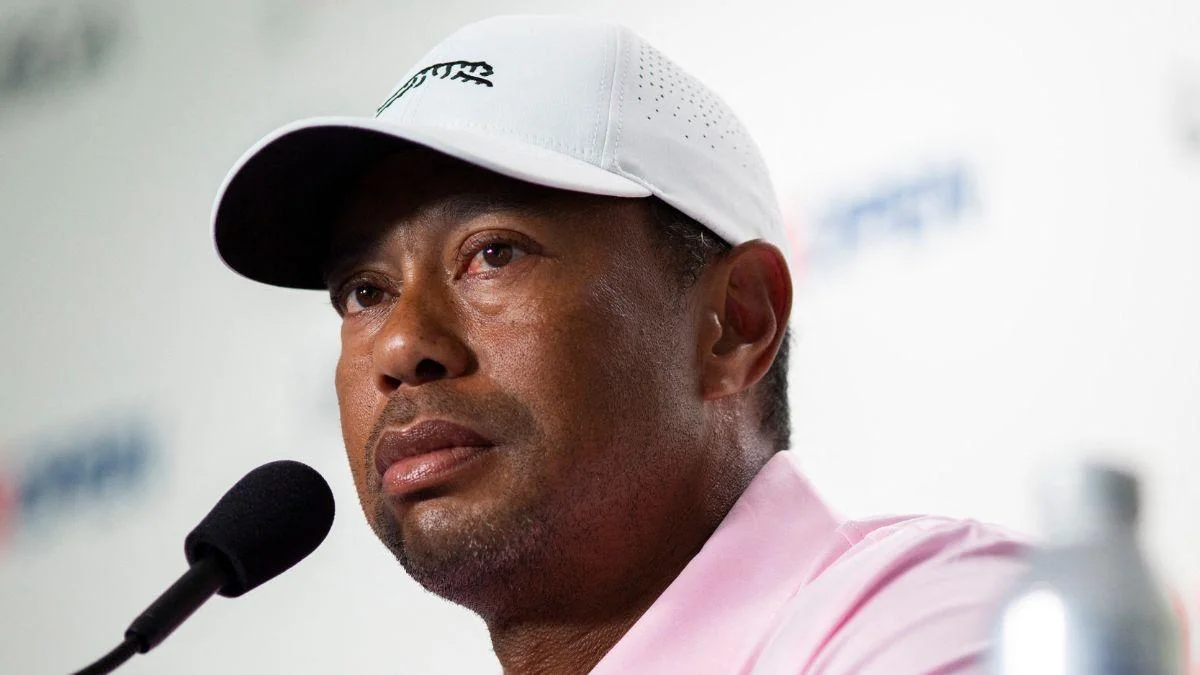
Tiger Woods has effectively transformed his dominance on the fairway into a ten-figure financial empire. According to Forbes, the golf icon now commands an estimated net worth of $1.5 billion. While many high-profile athletes rely heavily on league salaries or prize purses, Woods pioneered a model where on-course success functioned primarily as the marketing engine for a massive, multifaceted endorsement machine. His total career earnings—pretax—hover around $1.8 billion, a milestone that cemented his status as the second active athlete to achieve billionaire tier, trailing only LeBron James (more on LeBron here).
Despite the inevitable physical decline that comes with aging and the seismic shifts in the sport’s economic landscape following the entry of state-backed entities into professional golf, Woods remains a financial powerhouse. As of 2025, he continues to hold his position among the top earners in professional golf, ranked fourth overall. This longevity is anomalous; most athletes see their commercial viability crater as their competitive edge blunts, yet the "Tiger Effect" continues to generate substantial premiums for his partners.
The Hierarchy of Golf Wealth
Woods currently stands at the undeniable apex of the sport’s wealth rankings, a position that serves as a benchmark for every tour professional currently negotiating their own career trajectory. A recent analysis lists him as the wealthiest golfer in history, leading a pack of prominent figures that includes Greg Norman, Jack Nicklaus, Phil Mickelson, and Rory McIlroy. The top ten is rounded out by a cohort of modern and veteran stars, including Fred Couples, Jordan Spieth, Scottie Scheffler, Dustin Johnson, and Hideki Matsuyama.
The gap between Woods and his contemporaries is not merely a product of talent, but of timing and brand saturation. Woods hit his prime during the transition from terrestrial broadcast dominance to the global saturation of golf as a lifestyle brand. By the time younger players like Scheffler or McIlroy began commanding record-breaking sponsorships, the economic framework for professional golf had been fundamentally reshaped by the precedent set by Woods in the late 1990s and early 2000s.
Career Foundations and Competitive Longevity
Turning professional in 1996 at age 20, Woods embarked on a run of performance that remains largely unmatched in professional sports. His resume includes 15 major championships and 106 total worldwide victories, with 82 of those coming on the PGA Tour. To date, his on-course performance has yielded a record $121 million in prize money, a figure that is actually quite small relative to his overall net worth—illustrating that the prize money was merely the retainer for his true business, which was capturing audience attention.
When discussing his legacy, the Golf Hall of Fame member points to his sustained output as his primary point of pride. "I played at a high level for a long period of time," he noted. He specifically highlighted his cut streak—a period spanning over six years without missing a cut—as an accomplishment that speaks to his relentless consistency. This feat remains one of the most statistically significant demonstrations of focus in sports history, occurring despite the various personal and physical setbacks that have marked his trajectory and periodically sidelined him from the tour.
Asset Management: Beyond the Fairway
A significant portion of Woods' wealth is anchored in a sophisticated real estate portfolio that functions both as a personal sanctuary and a tactical investment strategy. His property journey began in 1996 with an 8,000-square-foot Florida residence, which served as his entry point into high-end real estate, eventually being sold to Bubba Watson in 2013 for $2.2 million.
His acquisitions grew in scale alongside his brand, moving from simple residential real estate to trophy assets. In 2004, he purchased a $3 million Newport Beach condominium and commissioned a $20 million, 155-foot yacht, the latter being a clear indicator of the liquidity he commanded at the time. During his marriage to Elin Nordegren, the couple diversified their holdings, notably acquiring property in Jackson Hole, Wyoming. Perhaps most emblematic of his transition into private life is his 12-acre, $40 million Jupiter Island estate, a massive compound that reflects the transition from a traveling athlete to an established mogul. For a detailed breakdown of these holdings, see the Architectural Digest analysis of his real estate assets.
Implications and Future Outlook
The billionaire-athlete model pioneered by Woods has altered how modern sports stars view their own economic potential. Today, elite players are no longer content to merely be the face of a brand; they are actively seeking equity stakes, founding their own venture capital firms, and utilizing their influence to shape the governance of their respective leagues. Woods proved that an athlete’s brand can outlive their physical ability to compete, turning the sport of golf into a platform for private equity and lifestyle management.
Moving forward, the primary challenge for the Woods brand will be the shift from "active competitor" to "legacy owner." As his on-course appearances dwindle, his ability to retain his massive endorsement premiums will depend on his success in business ventures, such as his partnerships in course design, entertainment concepts, and potential influence in the ongoing restructuring of professional golf. The question for observers is no longer how many tournaments he can win, but whether his business empire can maintain its current valuation without his daily presence on the leaderboard.