The standard metropolitan cocktail menu has entered a period of inflation that feels untethered from actual COGS (cost of goods sold). In many major urban centers, $20 has become the entry-level price for a standard pour, creating a feedback loop of sticker shock and diminishing guest frequency. Yet, the economics behind this trend are often overstated. Chicago’s The Radicle, a project from the team behind Daisies, is currently testing a model that challenges the necessity of these premiums, proving that a $10 to $12 cocktail price point is not just possible—it is sustainable, provided the back-of-house operations are aligned.

The Math of the Ten-Dollar Pour
The prevailing industry assumption is that high-end cocktails require high-end pricing to absorb the overhead of labor, real estate, and premium spirits. Beverage director Nicole Yarovinsky suggests that the primary variable in this equation is the target pour cost. While many operators aim for a rigid 18 percent margin, The Radicle intentionally recalibrated its target to 22 percent. That four-percentage-point shift, while seemingly minor, creates the necessary headroom to keep individual drink prices anchored at $10.
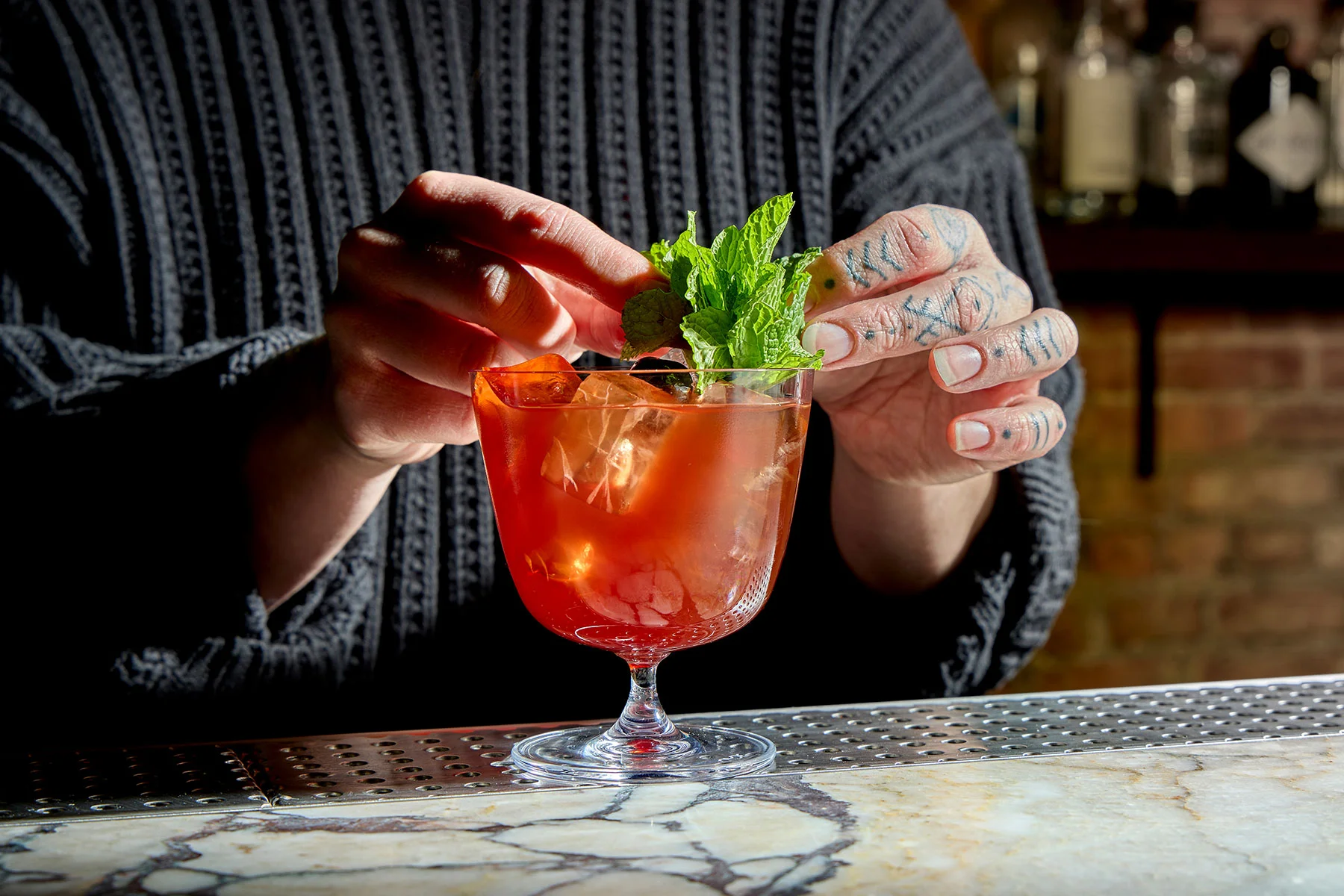
The mechanical breakdown of their signature cocktail, "The Rule of Three," reveals the actual overhead. By utilizing a blend of recognizable spirits—Monkey Shoulder Scotch, Cocchi Americano, and Diplomático Reserva—combined with a house-made fig leaf cordial processed from locally sourced materials, the total ingredient cost sits at roughly $1.91. Even factoring in the logistical cost of sourcing seasonal ingredients, the margin remains robust. The strategy here is not to replace premium spirits with bargain-bin alternatives, but to replace passive sourcing with active, resource-focused labor.
This is where the distinction between "luxury" and "resourcefulness" becomes central. The team at The Radicle treats sustainability not as a marketing hook, but as a cost-reduction strategy. Through fermentation and preservation techniques, they extend the lifecycle and utility of their produce. By processing ingredients in-house, they bypass the markup associated with pre-packaged components, effectively swapping cash for labor time. The result is a drink that maintains perceived value while keeping the literal cost of the pour under two dollars.
Labor and the Service Charge Model
A frequent critique of low-cost menus is that they inadvertently suppress staff earnings. The Radicle addresses this through a high-base-hourly structure and a mandatory 20 percent service charge applied to all bills. This model achieves two objectives: it guarantees a baseline income for staff regardless of the fluctuation in individual cocktail prices, and it replaces the volatility of a traditional tipping model with a structured, transparent compensation system. By pooling the service charge, the house minimizes the disparity between front-of-house roles and creates a leaner, more collaborative operational environment.
Transparency extends to the guest experience as well. The lower price point functions as a psychological threshold reduction. When a cocktail is priced at $10 rather than $22, the barrier to entry for experimentation disappears. Guests are significantly more willing to engage with complex, "out-there" ingredients—like dual-fermented grapefruit—because the financial risk of an unsuccessful order is negligible. This increased engagement results in higher volume and a more robust conversation between staff and patrons, turning the drink list into an educational tool rather than a static price list.
The Structural Shift in Beverage Strategy
The broader implication here is a necessary reevaluation of why modern bar programs have converged on a single, elevated pricing strategy. If a drink costs $2 to produce and $20 to consume, the delta between those numbers is rarely explained by material quality. It is a product of habit and a lack of creative pressure in the kitchen. When operators are forced to keep prices low, they are incentivized to innovate with their raw ingredients and optimize their supply chain—approaches that are frequently abandoned in favor of simply raising prices when costs rise.
For the industry at large, the move toward a more approachable menu is a response to the shrinking share of wallet allocated to alcohol by younger demographics. If the standard response to declining sales is to raise prices, operators will continue to alienate a customer base that has ready access to cheaper at-home alternatives. The Radicle’s experiment suggests that the solution is not to compete with the seltzer-in-a-can market by imitating it, but by offering a value-to-cost proposition that makes the on-premise experience feel like a sustainable habit rather than a financial indulgence.
Moving forward, the success of this model will depend on whether other operators can replicate the operational discipline required to make it work. The transparency of the math—sharing exact margins and the cost-of-production data—is a direct challenge to the industry’s status quo. The question is no longer whether an establishment can afford to charge less, but whether it can afford to continue doing business in a way that ignores the shifting economic reality of its customers.