The Tangible Asset: Why Site-Specific Art Defines Restaurant Longevity
In the hospitality industry, atmospheric consistency is often mistaken for simple interior design. However, the recent, high-profile theft of a George Choley painting from the 80-year-old Deetjen’s Big Sur Inn highlights a shift in how diners perceive permanence. When the painting—a fixture since the 1980s—was removed, the local community didn't just lament a loss of decor; they initiated a grassroots search-and-rescue campaign. This reaction underscores a reality that operators ignore at their peril: in an increasingly automated and transient dining sector, authentic, site-specific art serves as the primary tether between a brand’s history and its recurring clientele.

For institutions like Deetjen’s, art is not an accessory; it is a repository of institutional memory. Michelle Provost, the Inn’s archivist, notes that pieces like the Choley painting provide a "feeling of coming home." This isn't abstract sentimentality—it is a functional component of the customer experience that generates loyalty. When guests return, they are looking for visual continuity that mirrors the consistency of the kitchen’s output.
This reliance on physical permanence is particularly stark when contrasted against the rise of generative AI in restaurant marketing and visual branding. While some establishments are currently experimenting with AI-generated murals or logos to cut costs, these assets lack the "lived-in" pedigree that defines the industry’s most successful spaces. A review of established restaurant art programs reveals a common thread: the value lies in the human process and the specific, often unconventional, origin stories of the pieces themselves.
Engineered Ambiance and Strategic Placement
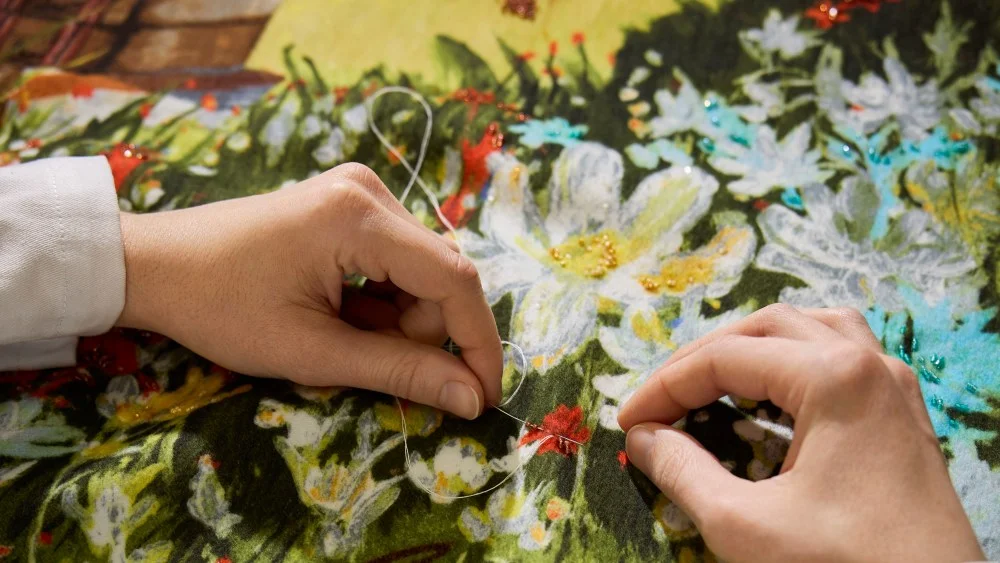
The best examples of restaurant art are those that engage with the physical limitations and narrative goals of the space. Consider March in Houston. CEO June Rodil opted for a massive, tufted textile installation by Argentinian artist Alexandra Kehayoglou. Rather than treating the piece as a static background, the design team positioned it overhead—a tactical decision driven by the realities of high-traffic dining, where "chairs and heels, dropped forks, [and] jovial splashes of wine" would threaten a floor-level piece. The result is an environment that feels "responsive, generous, and alive," reinforcing the restaurant’s hyper-regional Mediterranean menu through texture rather than mere wall coverage.

Similarly, the Madonna Inn in San Luis Obispo employs wood carvings by Bavarian artisan Alexander Zeller—known as "Mr. Chips"—to define its midcentury aesthetic. The choice to leave portions of his work unfinished following his 1961 passing serves as a literal historical marker. It transforms the bar from a decorated room into a site of historical preservation, allowing guests to interact with the artist’s process even decades later. This is the antithesis of the "disposable" aesthetic that plagues many modern fast-casual renovations.
The Value of the Unfiltered Narrative
Sometimes, the most "viable" art for a brand isn't a museum-quality piece, but a quirky, internal reference that acts as a shibboleth for regulars. At Roberta’s in Brooklyn, a painting depicting a pizza-faced Jake Gyllenhaal and Heath Ledger as an homage to Brokeback Mountain has become as essential to the identity of the space as the pizza itself. Commissioned from early regular Zachary Kinsella, the work is proof of the brand’s origins. It functions as an inside joke that cements the restaurant’s status within the community. It doesn't need to be technically sophisticated to be commercially successful; it needs to be authentic to the restaurant’s specific timeline.

Even in Manhattan, where space is at a premium, Chez Nous has integrated a mural by Cecily Brown directly into its architecture. By painting the mural directly onto the wall, the restaurant ensures the art is inextricable from the structure itself. Brown, who once waited tables in the West Village, brings a level of legitimacy that resonates with local diners who value the neighborhood’s history. The artwork serves as a physical bridge between the restaurant's current high-end status and its owner’s roots in the city’s service-industry trenches.
The Risk of Homogenization
The industry is currently at an inflection point. As restaurant groups attempt to scale rapidly, the pressure to use standardized, algorithmically generated visual elements is mounting. However, the examples of South Coast Deli—which retains locally commissioned pieces from artists like Lloyd Dallett to maintain its Factory Pomo-meets-Global Village Coffeehouse vibe—demonstrate that "tremendous personality" is a distinct competitive advantage.
Operators should view their art not as an interior design line-item, but as a long-term capital asset. When you commission local artists or integrate historically significant pieces, you aren't just decorating; you are creating a secondary narrative layer that AI cannot replicate. The theft at Deetjen’s proves that when art is truly embedded in the soul of a restaurant, it becomes a protected entity. In a marketplace that rewards genuine connection, the "human-led creative process" is not just an aesthetic choice—it is a functional defense against the impending tide of digital homogeneity. Moving forward, the restaurants that prioritize these tangible, idiosyncratic connections will be the ones that hold onto their relevance, while the others will simply fade into the visual background.