Dyson’s Skinniest Vacuum Ever Got Me to Clean My Kitchen More Often
But is the PencilVac worth the splurge or just an overpriced broom?
The Domestic Tug-of-War
Parenting is a masterclass in compromise, particularly regarding household standards. With a preschooler and a preadolescent, my spouse and I have largely surrendered the battle for a pristine home. We are still attempting to instill basic chores, such as managing stray Lego bricks, but the recurring accumulation of kitchen detritus—crumbs, spills, and assorted dust—feels inevitable. Maintaining a truly "clean" floor is, for us, an elusive goal rather than a reality.
Our current equipment, a Dyson Outsize, has served us faithfully for five years. While it handles deep cleans across various floor types with ease, the sheer bulk of the unit makes it an unappealing option for quick touch-ups. When something is heavy and cumbersome, the friction required to retrieve it often outweighs the benefit of a tidy room. The psychological hurdle of lugging a five-pound device out of a closet for a three-second cleanup is a well-documented deterrent in high-traffic households.
This brings us to the Dyson PencilVac. Dyson has historically leaned into a distinct, high-tech aesthetic—often resembling a gadget from a cartoon action sequence—but the PencilVac moves in the opposite direction. It is a stripped-back, wand-style device that looks more akin to a modern manual carpet sweeper than a powerhouse vacuum.
I put the device through a month of daily testing to determine if this minimalist approach is a genuine utility or simply an expensive novelty. With an MSRP of $600, the stakes for this "skinny" vacuum are higher than its form factor suggests. I needed to know: does it truly earn its place in my cleaning routine, or is it destined to be the most expensive broom I’ve ever owned?
Design Philosophy and Functional Ergonomics
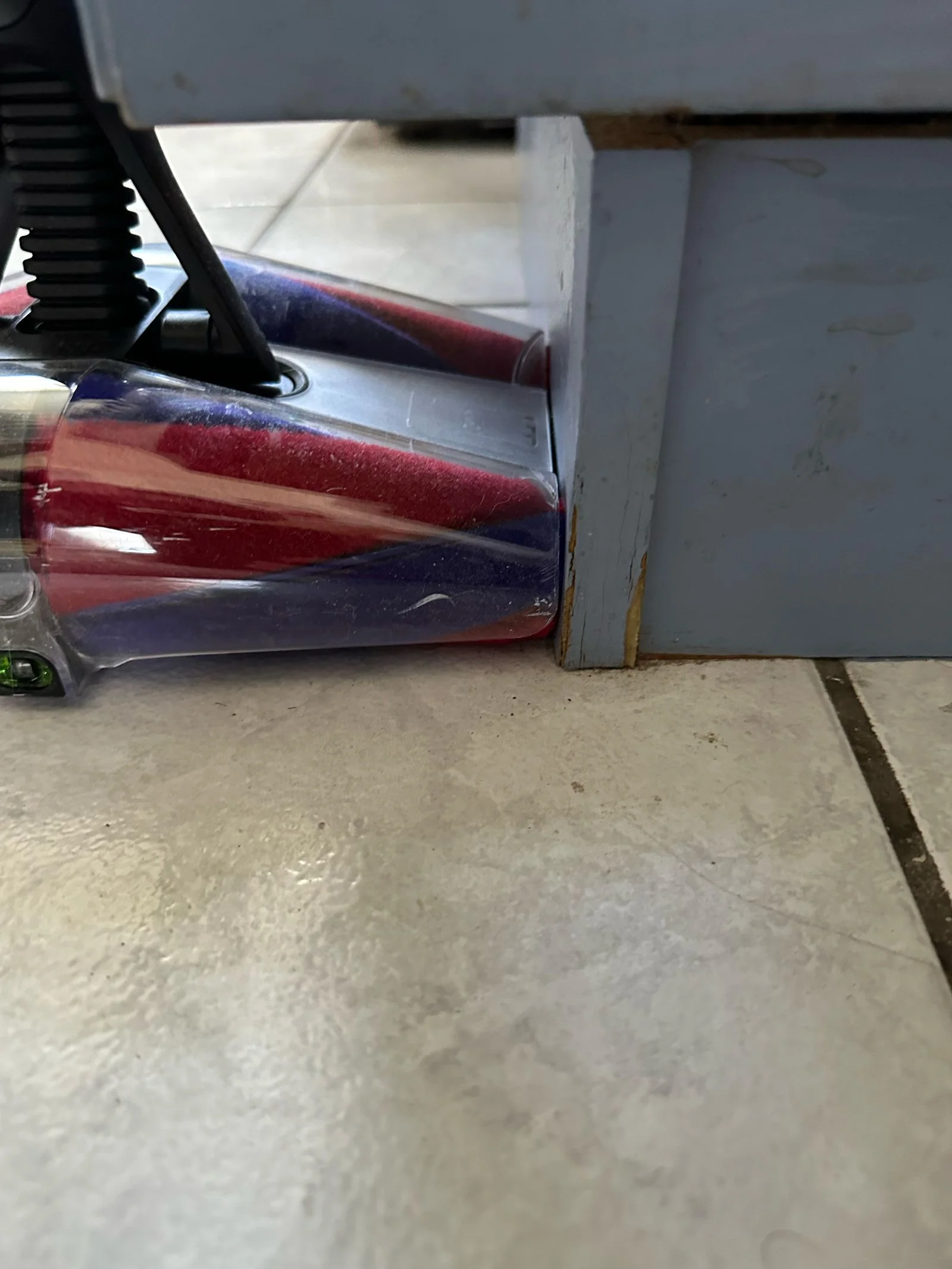
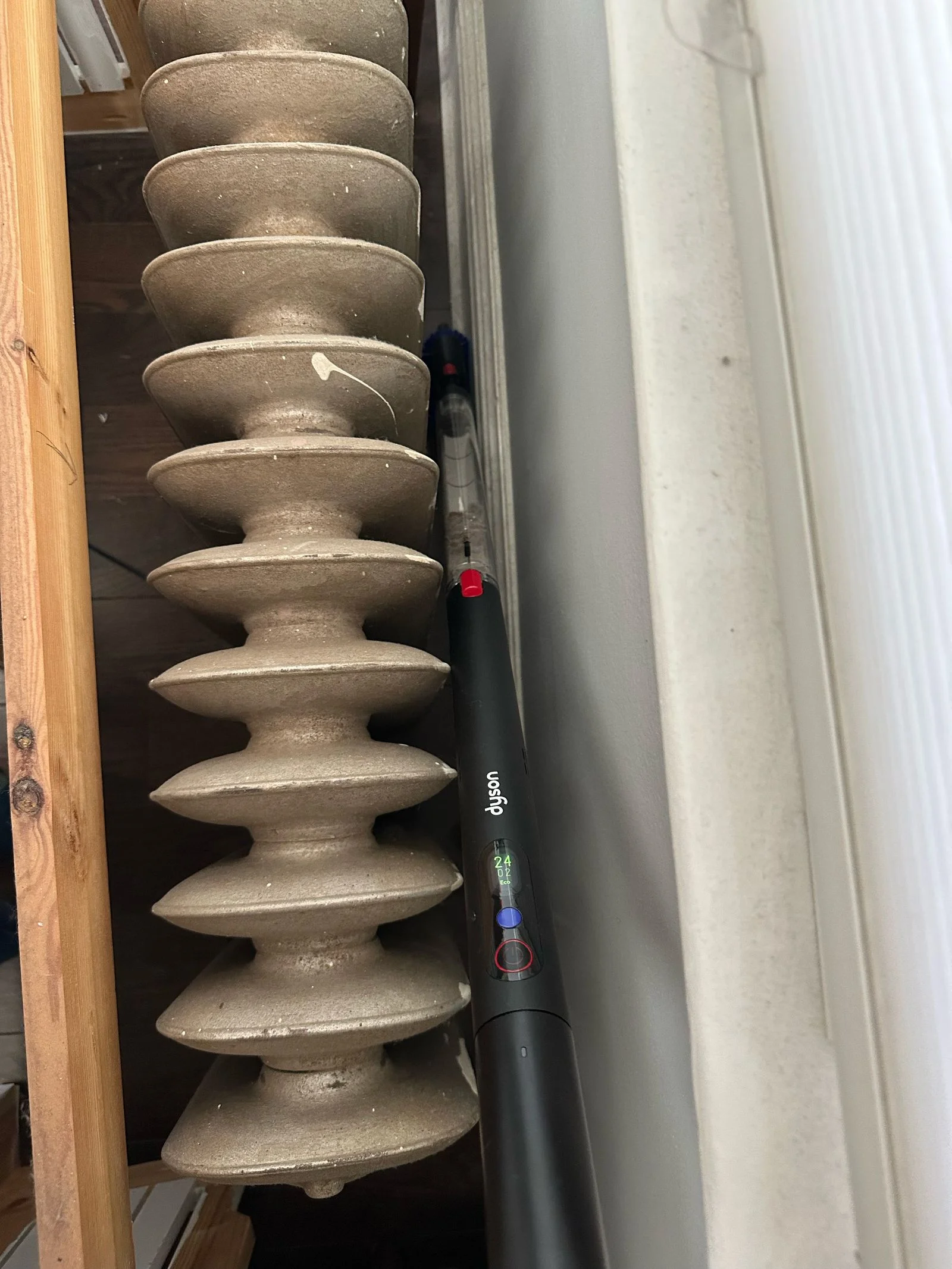
The PencilVac represents a departure from Dyson’s typical “more is better” design ethos. By housing the motor, battery, and collection bin entirely within a 1.5-inch diameter handle, the company has traded raw capacity for extreme maneuverability. Its motorized head—available in the “Fluffycones” variant with dual microfiber rollers or a standard rectangular cylinder—allows it to navigate spaces that would choke a standard upright or larger stick vacuum. With its 3.5-inch clearance, the device excels at getting under low-profile furniture and into narrow gaps, such as those between walls and radiators, where traditional heads fail.
The engineering shift here is significant because it minimizes the "center of gravity" issue found in traditional cordless stick vacuums. In older models, the heavy motor located at the wrist can cause forearm fatigue during extended use. By distributing the internal components along the length of the shaft, the PencilVac feels more like a natural extension of the arm rather than a piece of mechanical machinery. This balance significantly lowers the effort required for light, daily maintenance, which is exactly why I found myself reaching for it far more often than the bulky Outsize.
The Performance Trade-offs
Performance-wise, the numbers are impressive on paper: a 140,000 rpm motor delivering 30 minutes of runtime. The inclusion of green LED illumination is a polarizing but functional touch, effectively highlighting fine particulate matter that otherwise escapes the naked eye. However, the maintenance experience reveals the compromises of this form factor. The “syringe” style bin-emptying mechanism is clever, but the seals are prone to clogging with fine dust and hair, which can degrade the sliding action and latch integrity. Users should anticipate more frequent cleaning of the vacuum itself compared to Dyson’s larger units.
Furthermore, the 30-minute runtime is a best-case scenario achieved only on the lowest power setting. When confronting stubborn kitchen debris or high-pile rugs, the power drain accelerates rapidly, often shortening the usable window to roughly 15 minutes. While this is sufficient for a quick kitchen pass, it creates a "range anxiety" that forces the user to remain constantly mindful of their remaining charge. It is a tool designed for rapid surgical strikes, not for systematic, room-by-room deep cleaning.
Market Context and Future Outlook
Ultimately, the PencilVac is a niche specialist. It isn’t a replacement for a primary vacuum in carpeted homes; it lacks the necessary suction depth to clear debris from dense fibers or textured mats like these Waterhog mats. Its dependence on a freestanding base rather than a wall-mounted dock is a significant ergonomic oversight for smaller apartments. If you already own a robust, full-sized vacuum, this serves as a convenient secondary tool for rapid-response cleaning. If you don't, prioritize a more versatile primary model before considering this sleek, albeit limited, luxury.
The existence of the PencilVac signals a broader shift in the premium home appliance market: the bifurcation of the "cleaning ecosystem." As consumers become increasingly wary of the storage burden of large, multi-attachment vacuums, we are likely to see more manufacturers release ultra-slim, task-specific appliances. However, at a $600 price point, the PencilVac enters luxury territory that may be difficult for many households to justify. It remains a testament to superior industrial design, but it currently functions more as a convenience for the affluent than a practical necessity for the average parent navigating a messy home.