The Only Tool That Matters for Your Sourdough
Using a straight-edged chef’s knife on a crusty boule is a fast track to crushed crumbs and frustration. If you want precise, clean slices of bread or delicate, non-mushy tomato rounds for your sandwiches, a dedicated serrated blade is non-negotiable.
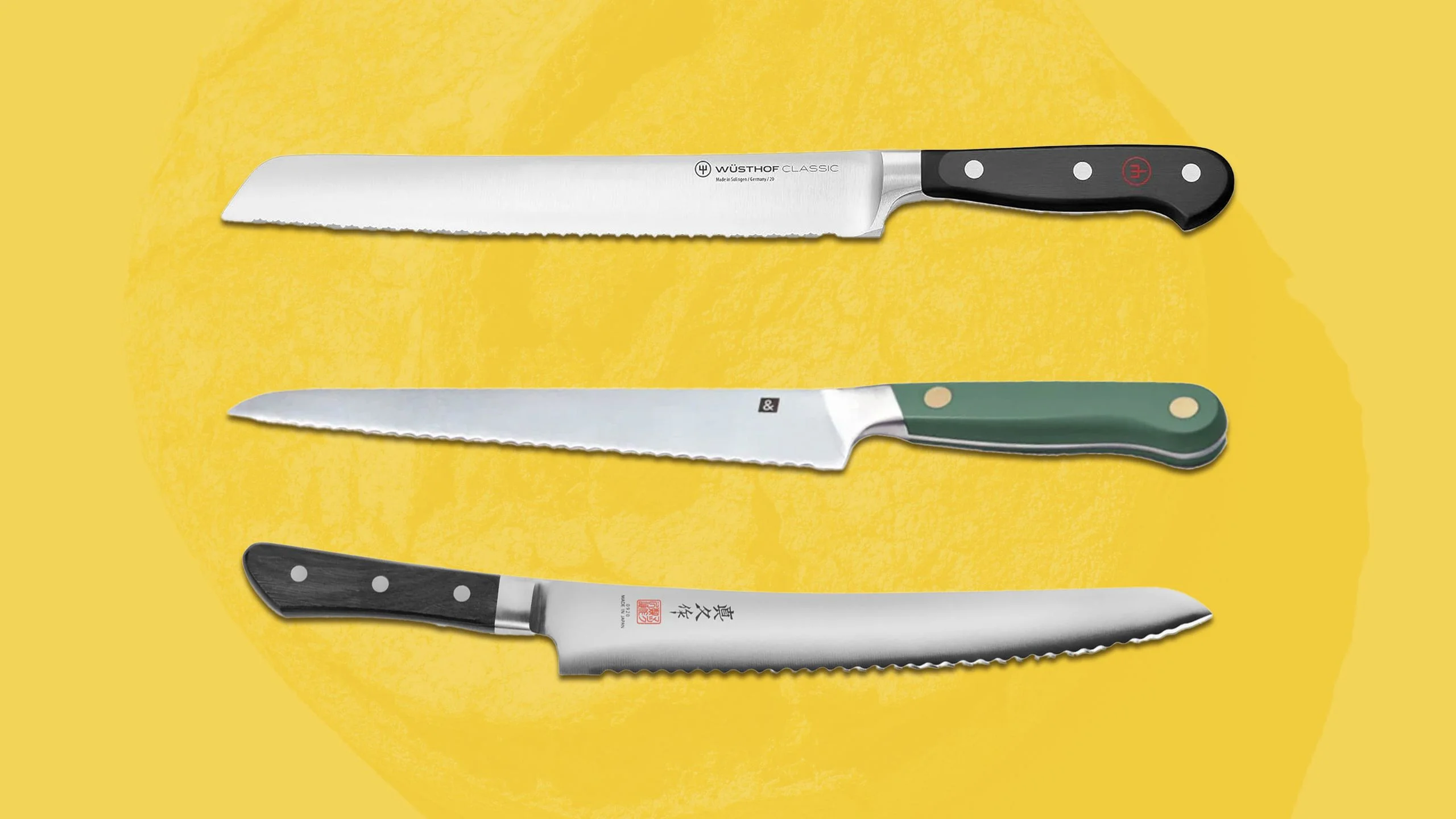
Over a rigorous, multi-year evaluation process, we scrutinized 35 different bread knives. We weren't looking for aesthetics; we were testing for performance, specifically how each blade managed the structural integrity of both tough crusts and soft interiors. Our testing revealed that the most effective tools generally feature a degree of flexibility in their stainless-steel construction, allowing the serrations to glide through resistance rather than tearing through it.
Top Recommendations at a Glance
- Best Overall: Tojiro 10.6" Bread Slicer (F-687)
- Best Budget Option: Mercer Culinary 10" Millennia
- Premium Choice: Shun Classic 9" Bread Knife
Our latest update includes data from six additional entry-level models, including a contender from Winco. While it didn't unseat our current winners, it warrants a mention for those shopping on a strict budget. Below, we break down exactly why the models listed above earned their place in our kitchen kits.
Our testing panel recently updated its top recommendation, unseating the long-time incumbent from Mac in favor of a new frontrunner: the Tojiro 270-mm bread slicer. Retailing at $91 (down from $100), the Japanese-made blade distinguishes itself through a rare combination of mechanical efficiency and value. Its 10.6-inch length provides sufficient travel to navigate substantial loaves in minimal passes, while the intentional curve of the blade serves as a fulcrum, granting the user extra torque when confronting dense or irregular crusts.
Beyond its geometry, the Tojiro earns its spot through raw performance. The scalloped serrations are surgically sharp, allowing it to move through high-tension items—such as vine-ripened tomatoes—without tearing. With a contoured pakkawood handle and a full-tang design, the build quality feels substantial in the hand. That said, budget-conscious buyers should remain pragmatic: the knife world is notoriously prone to diminishing returns, and cheaper alternatives can often handle the same tasks with comparable effectiveness.
While the market is flooded with high-end cutlery, the enduring popularity of the Mercer Culinary Millennia 10" bread knife proves that professional-grade performance doesn't require a triple-digit price tag. Retailing under $20, this tool has become a fixture in the Bon Appétit Test Kitchen, earning a permanent spot in Chris Morocco’s rotation since his culinary school days. Its design—defined by wide, wavy serrations rather than aggressive, pointed teeth—offers a reliable, stable cutting experience that handles everything from artisan crusts to soft produce with relative ease.
However, the value proposition comes with inevitable trade-offs. The Mercer features a synthetic rubber-and-plastic handle that some users find less tactile than premium wood alternatives. Furthermore, while it is a workhorse for daily tasks, it lacks the surgical edge retention found in pricier competition, meaning it requires more physical force when processing particularly dense or hardened loaves. For those prioritizing absolute precision, budget-friendly alternatives exist, but for the average home cook, this knife remains a benchmark for utility-per-dollar.
If your budget allows for a higher-tier investment, the Shun Classic 9" Bread Knife sits at the opposite end of the spectrum, trading entry-level affordability for refined ergonomics and superior steel. Choosing between a tool designed for survival in a commercial kitchen and one optimized for domestic longevity is ultimately a matter of preference, but the existence of both reinforces a simple truth: once you move past the aesthetic markups of luxury branding, bread knife performance is rarely tied to price.