The Wine Fridge Paradox: Protecting Your Liquid Assets
Whether your collection consists of a half-dozen bottles sequestered in a cupboard or a serious stash intended for long-term aging, the way you store wine directly dictates how it survives until the cork is pulled. It is less about buying another appliance and more about mitigating the risks of degradation—an insurance policy for your palate and your wallet.
“I’m not saying everyone needs a wine fridge,” notes certified sommelier and Wine Pairing for the People author Cha McCoy. “But, if you like wine, and you’re spending your money on bottles, you probably want them to hold up.”
Unlike spirits, which remain largely inert when stored at room temperature, wine is chemically active. External variables—UV light, temperature fluctuations, humidity levels, and ambient vibrations—all alter the trajectory of a wine's evolution. Your kitchen refrigerator, while reliable for milk and leftovers, is poorly suited for the nuanced requirements of wine, lacking the specialized climate control necessary to prevent premature aging or cork failure.
Navigating the market can be daunting, given the technical jargon surrounding carbon filtration and multi-zone climate settings. However, finding the right unit comes down to balancing your storage capacity needs with the specific environment of your living space.
Top Recommendations
After evaluating units across various sizes and price brackets, these are the standout performers:
- Best for Large Collections (50+ bottles): Wine Enthusiast Classic 80
- Best for Mid-Sized Needs (under 50 bottles): Zephyr Dual Zone Wine Cooler
- Best Aesthetic Appeal: Rocco The Super Smart Fridge
- Best Countertop Solution: Cuisinart Private Reserve 8-Bottle Wine Cellar
- Best Splurge for Serious Collectors: Eurocave La Première L
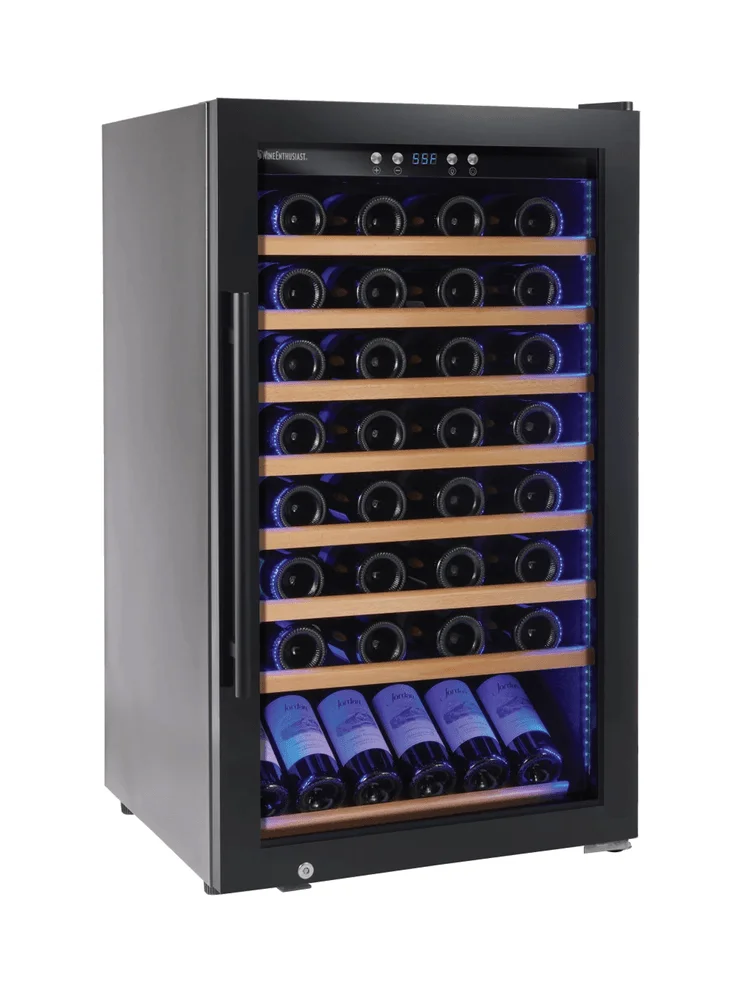
For those prioritizing baseline utility over specialized features, the Wine Enthusiast Classic 80 Wine Cellar ($1,199) remains a sensible pick. It delivers a quiet motor and a relatively sleek aesthetic, making it an unobtrusive addition to a room. While the manufacturer markets it as an 80-bottle unit, my testing found that figure to be overly optimistic; you are more realistically looking at a 53-bottle capacity before shelf logistics become a headache. Additionally, the five-foot power cord can be restrictive depending on your room’s electrical layout. However, it earns points for its sturdy, UV-protected glass door and smooth-gliding wood-trimmed shelves, backed by a solid warranty covering three years on mechanical components.
Stepping up in both price and complexity, the Zephyr Dual Zone 45 Bottle Wine Cooler ($1,899) is better suited for collectors who require distinct temperature environments for varied vintages. At nearly double the price of the entry-level options, you are paying for the precision of a dual-zone system rather than pure storage volume.
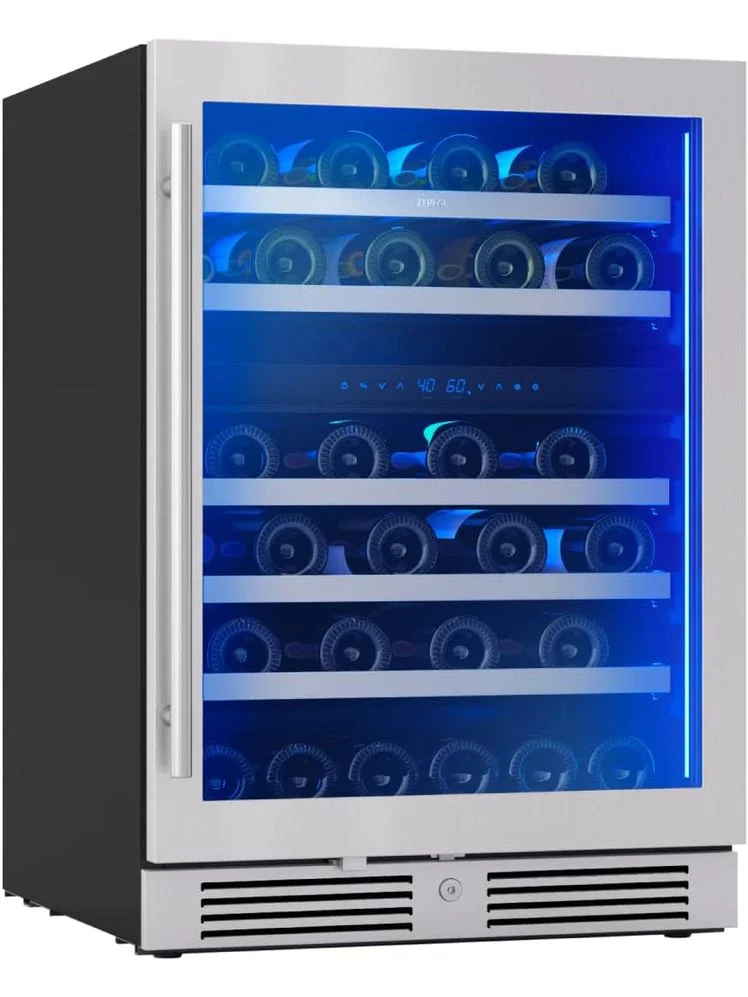
For those prioritizing integration and utility, the Zephyr dual-zone unit stands out as a pragmatic choice. Standing at 33.9 inches tall, it fits seamlessly under standard kitchen counters, though it remains perfectly capable as a standalone appliance. In testing, the unit maintained a consistent temperature range of 34° to 65°, offering enough versatility to accommodate delicate vintages or even fine cheeses, as noted by industry observers.
The interior design is functional, featuring five shelves with flat wooden slats that extend fully to ensure easy access to rear bottles. Flexibility is a clear design goal here; the door is reversible, the lighting is adjustable across three colors, and users can opt for custom finishes or handle styles for an additional $49.99 to $89.99. While the single-zone variant exists, the marginal $100 price difference makes the dual-zone model the clear value winner.
Prospective buyers should approach the Zephyr with two caveats: the warranty is limited to two years on parts and labor—five for the compressor—and you are reliant on third-party retailers for logistics, as the manufacturer does not facilitate direct consumer sales.
A Note on Market Trends
Beyond the functional appeal of the Zephyr, the industry is seeing an influx of connected, premium-priced hardware like The Super Smart Fridge from Rocco. While these high-end entrants command a premium, often retailing near $1,800 to $2,000, they represent a shift toward "smart" home integration. For most users, however, a reliable compressor and a stable thermal environment remain the primary metrics of success. Whether you opt for a tech-heavy luxury piece or a workhorse appliance, verify the retailer's return policy before checkout—in the appliance space, the quality of delivery and service often matters as much as the internal specifications.