Early literacy intervention programs, once considered untouchable infrastructure, are increasingly becoming the latest battleground in the ongoing ideological struggle over public education resources. Among the most visible casualties of this shift is the Dolly Parton Imagination Library. Despite decades of peer-reviewed data confirming that home library access is a primary predictor of academic success—particularly for disadvantaged cohorts—state legislatures are systematically withdrawing financial support for this initiative.
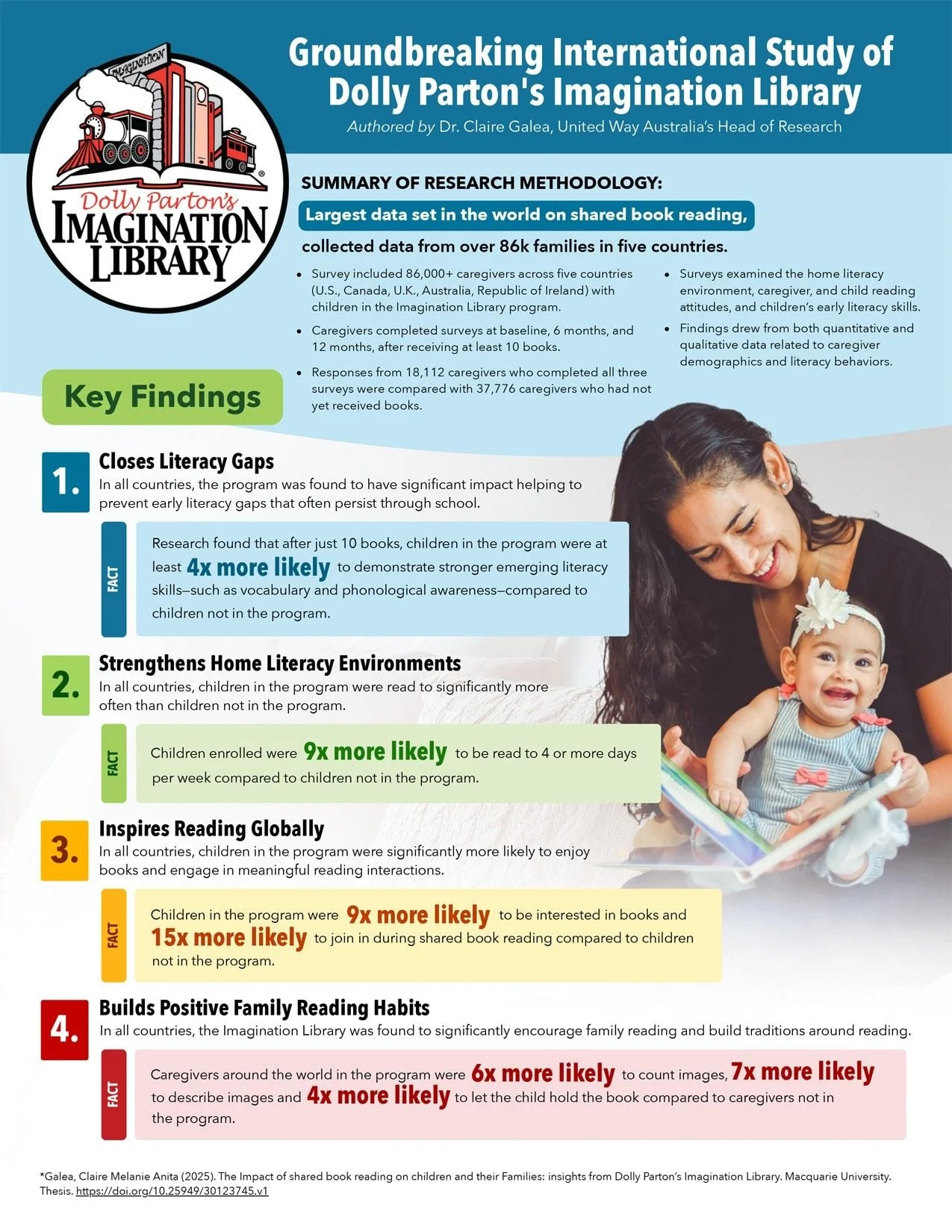
The Imagination Library, established in Sevier County, Tennessee, in 1995, has grown into a global distribution machine. By 2023, the program reached a milestone of 200 million books delivered, with approximately one in six children under five in the United States currently enrolled. The model is elegantly decentralized: while the central organization leverages wholesale pricing to acquire titles, the actual funding and community outreach rely on local affiliates, often regional United Way branches or state-level partnerships. This hybrid public-private structure was designed for scalability and local buy-in, but current political trends are turning this dependency into a point of failure.
 |
The skepticism directed at this program is not rooted in budgetary constraints, despite arguments to the contrary. In Indiana, for example, the state’s 2024–2025 allocation for the Imagination Library was $4 million—a rounding error in a $51 billion state budget. When officials moved to cut this funding, the backlash forced a pivot toward private, voluntary fundraising led by the governor’s office. This strategy has proven unsustainable; despite reaching all 92 counties, the program is now failing to meet its financial targets. When critical educational infrastructure is relegated to the whims of private donors, the result is a fragile, unstable service that can be deactivated by any shift in the political wind.
Other states have mirrored this trend. Kentucky recently engaged in a protracted budgetary conflict, threatening a funding formula shift that would have offloaded two-thirds of the costs onto local partners—a move that would have effectively shuttered 80% of the state’s affiliate programs. While advocates successfully lobbied to restore the dollar-for-dollar state match, the volatility of the commitment highlights a broader instability. In Washington, the state government completely abandoned its contribution, directly violating the legislative promises made in 2022 to support the program. Alabama and Pennsylvania are currently in legislative limbo, with relevant bills stalled in committee, further cementing a pattern of administrative paralysis.
This systematic dismantling of literacy support is rarely about fiscal conservatism. Instead, it reflects an increasingly hostile stance toward the dissemination of diverse perspectives and standardized early-education resources. As documented in ongoing reports, this is part of a wider effort to exert control over library collections and school materials. From the implementation of AI-driven book screening in Texas to the politicized firing of library board members in Montana, the objective is to create a chilling effect on intellectual access. The removal of titles in Polk County, Florida, or the appointment of openly anti-library board members in Billings, Montana, shows that the goal is not merely "parental rights" but the consolidation of ideological control over public information.
When state governments, such as that in Texas, advance required reading lists dominated by singular cultural perspectives while concurrently defunding programs that offer broader access to literature, the distinction between "protecting students" and "indoctrination" vanishes. The administrative burden of these policies is intentionally high. Whether it is the requirement for 30-day public comment periods on every new acquisition or the use of automated scanners to flag content, the goal is to make the management of a library collection so burdensome that only the most sanitized material survives.
This reality requires a shift in how professionals evaluate the health of educational institutions. It is no longer enough to look at school funding levels; one must look at the structural integrity of the resources being provided. As the fight over the Imagination Library demonstrates, the infrastructure of literacy is being treated as an expendable line item rather than a fundamental public good. Organizations that rely on the state for matching funds are learning that a "public-private partnership" is only as reliable as the current administration’s commitment to public literacy.
Going forward, we should expect more states to leverage the "private funding" model as a way to quietly sunset programs that they find ideologically incompatible. For those tasked with managing these systems, the mandate is clear: the current legislative environment is not a temporary anomaly but an ongoing systematic challenge to the function of public learning centers. Dependence on state budgets for basic reading initiatives is now a high-risk strategy, and future sustainability will require finding alternative revenue streams that are not subject to the biennial cycle of political retaliation.
Industry Status: April 2026
- Alaska: Legislation aimed at protecting librarians from harassment is advancing.
- Alabama: A proposal to streamline the removal of library board members has been defeated.
- Florida: Polk County schools are engaging in preemptive book removals under state pressure.
- Arizona: Queen Creek Unified has expanded superintendent authority over library vetoes.
- Texas: The State Board of Education has moved toward a mandatory, ideologically narrow reading list.
- Texas: Several districts are operationalizing AI-driven censorship tools via SB 13.
- California: Grossmont Union faces litigation over alleged systemic discrimination against LGBTQ+ literature.
- Tennessee: Rutherford County has replaced a professional librarian with an interim director following the removal of collection materials.
- Maryland: The ACLU is litigating against the Somerset County Board of Education regarding transparency in book removal practices.