For decades, the cultural narrative surrounding the American rural experience was defined by a specific, quiet tension: the friction between a picturesque, pastoral aesthetic and the harsh socioeconomic reality of isolation. Growing up in a landscape characterized by low per capita income and limited professional mobility, the act of seeking information often required a mechanical, analog bridge. For many, interlibrary loan systems served as that critical infrastructure, physically transporting bound volumes in reinforced canvas envelopes to connect isolated readers to the wider world.
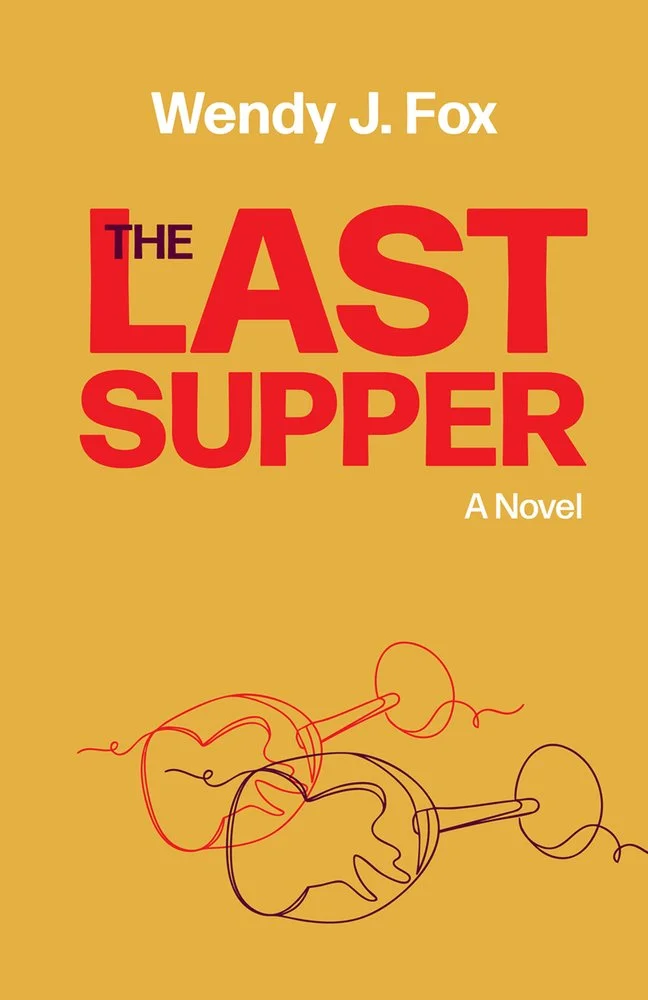
This dynamic—where loneliness acts as a catalyst for creative and economic survival—forms the backbone of Wendy J. Fox’s novel, The Last Supper. Her protagonist’s trajectory highlights a recurring literary preoccupation: the struggle against restrictive family structures and the search for authentic community in environments that discourage divergence. It is a reminder that the "community" we are born into is often not the one we ultimately require to function, let alone thrive.
The following titles examine the mechanics of connection—from reconciling with the spectral presence of the dead to navigating the dissolution of decade-long friendships. These authors shift the focus from the act of belonging to the grueling, often messy process of constructing a chosen tribe.
The In-Betweens by Davon Loeb
Loeb’s memoir provides a structural examination of "outsiderness." By tracing his experience as a biracial, Black and Jewish individual in the insular suburbs of New Jersey, he avoids the trap of simple narrative venting. Instead, he meticulously documents how social networks—first loves, early employment, and collaborators—act as the scaffolding for personal identity when the primary family unit offers only fragmented belonging.
Ideas of Heaven by Joan Silber
Silber’s linked stories utilize the perspective of hindsight to deconstruct the boundaries between opposition and alliance. Rather than treating religious or social faith as a central pole, she observes how individuals navigate radical empathy—measuring exactly how much utility they are willing to extract or sacrifice for those they prioritize. It is a precise look at the calculus of human connection.
White Horse by Erika T. Wurth
While categorized as Indigenous horror, the technical core of Wurth’s novel lies in the haunting as a metaphor for historical and familial baggage. The protagonist’s engagement with a spectral family history isn't just atmospheric; it serves as a vehicle to define what "community" looks like in practice—whether that manifested in a barroom social circle or traditional kinship ties.
These Impossible Things by Salma El-Wardany
This work dissects the lifecycle of female friendships under the pressure of external societal expectations. By following three women in London, El-Wardany illustrates how the "common" interests that solidify a friendship in early adulthood often become the friction points that threaten its integrity as life paths diverge.
Bad Bad Girl by Gish Jen
Jen’s novel approaches the intergenerational saga through a spectral lens, allowing a deceased mother to narrate her own cultural entrapment. It serves as an exploration of how trauma is transmitted and, eventually, how a new, post-mortem bond is negotiated through the act of narration itself.
Hello Wife by Lisa K Friedman
Friedman presents a gritty, non-idealized look at the intersection of middle-age desperation and the American opioid epidemic. By refusing to paint her protagonist's engagement to an addict as a redemption arc, she isolates the raw, often uncomfortable need for companionship—even when that companionship is inherently destructive.
Clutch by Emily Nemens
Nemens charts the internal politics of a group of five women turning 40. The novel is less about the unity of friendship and more about the "side-alliances" and internal competition that define modern social dynamics. It serves as an audit of the maintenance costs associated with long-term, multi-dimensional connections.
Nadezhda in the Dark by Yelena Moskovich
In this narrative written in verse, Moskovich addresses the rootlessness inherent in the post-Soviet experience. By documenting the silence between two partners in Berlin, the work explores how geopolitical displacement leaves an imprint on personal relationships, and how the act of loving someone is often inseparable from the act of processing shared histories of loss.
The common thread across these works is the rejection of the "happily ever after" of communal integration. Instead, these narratives suggest that community is something that must be constantly negotiated, defended, and occasionally rebuilt from the wreckage of past failures. Readers should look past the emotional resonance of these titles and consider the underlying structural critique: that for many, community is not a given environment, but a technical feat of social engineering.