The Architecture of Stuck: Deconstructing Creative Inertia
For most professionals—writers, designers, or engineers—the "stuck" state is treated as a psychological failure. We categorize it alongside procrastination or lack of discipline. However, looking at the structural mechanics of creativity suggests that inertia is not a personal deficit; it is a byproduct of premature optimization. When we treat the blank page as a final product rather than a sandbox, we invite the very paralysis that halts progress.
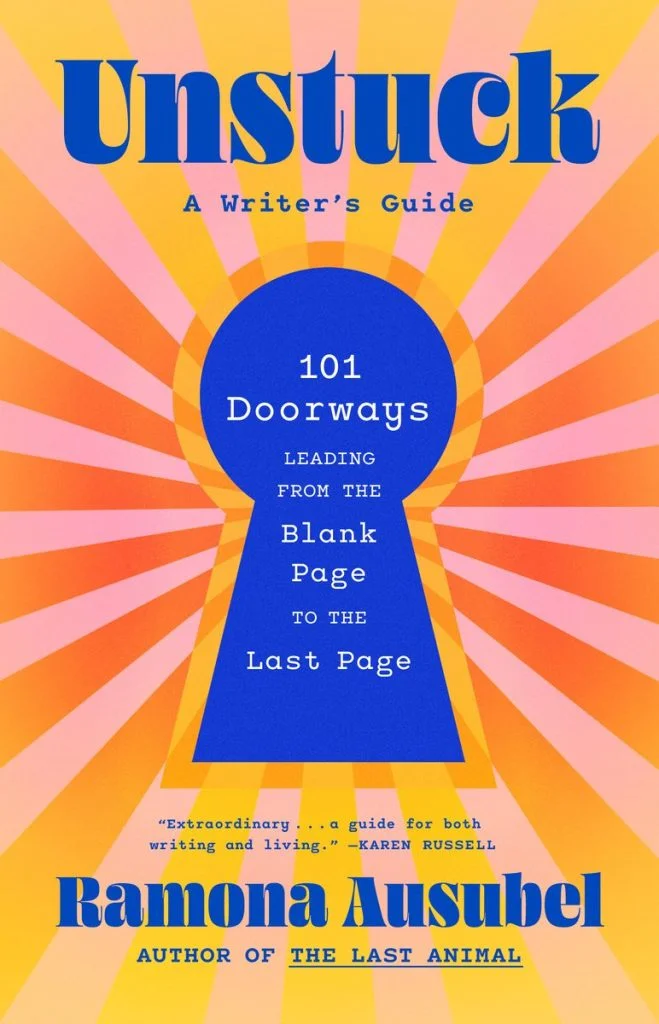
Ramona Ausubel’s recent work, Unstuck: 101 Doorways Leading from the Blank Page to the Last Page, argues that the professional’s primary enemy is the "quality control" reflex. This feedback loop—the internal critic that expects the first iteration to resemble a finished masterpiece—is functionally useless in the early development phases. In creative endeavors, as in software development, forcing a modular, polished structure onto a base layer of unformed ideas creates a rigid architecture that cannot adapt or evolve.
The solution is not a more disciplined workflow, but rather a deliberate suspension of editorial judgment. Ausubel describes this initial phase as "primordial slush"—a necessary, chaotic state of content generation where the primary goal is not coherence, but density. To demand logic from a first draft is to build a harness for a dog that does not yet exist. The professional reality is that creators operate within the context of their lives—fragmented time, domestic responsibilities, and external stressors. These interruptions aren't hurdles to the process; they are often the source material that powers the work. The disconnect arises when the creator attempts to partition their life from their output, forgetting that the most potent work is rarely written in a vacuum.
The Physics of Creative Energy
If "slush" is the raw material, then "writer physics" is the mechanism for organization. Rather than relying on rigid plot points or predefined outlines, Ausubel proposes a method of tracing energy flows. By identifying the kinetic potential between two disparate elements—a character and a physical object, or a memory and a current conflict—the creator can generate momentum. This moves the workflow away from top-down planning and toward a responsive, emergent system. It is a pivot from asking, "What should happen next based on traditional rules?" to "What is the logical collision between these two existing energy states?"
This approach mirrors iterative development cycles seen in other complex technical fields. By pressing energetic forces together, you create friction. Friction generates heat. That heat drives the next iteration. It is an acknowledgment that content is not something you "find" or "plan"; it is something you synthesize through repeated, small-scale collisions. Following this logic allows the work to define its own trajectory, avoiding the frontage road of forced plotting that often leads to sterile, predictable outcomes.
Iterative Degradation of the Blank Page
The most dangerous myth for the professional is that of the "blank page" as an obstacle that must be conquered with a single, heroic effort. The reality is that the page is a blank slate only if the creator lacks a strategy for incremental degradation. Every attempt to define the scope—deciding on a setting, a character motivation, or a timeline—is a choice that occupies space. You cannot know the final output at the outset, just as a project lead rarely knows the final state of a codebase at the sprint planning meeting.
The "start anywhere" methodology is not a suggestion of aimlessness; it is a tactical removal of the threshold of entry. Twenty minutes of activity, regardless of its quality, terminates the state of inertia. The goal is to move from a state of 0 (blank) to a state of 1 (existence), where the work can then be iterated upon. The "swamp monster" of a first draft—awkward, messy, and unpolished—is objectively superior to the perfect, unwritten idea. The monster can be refined, fed, and evolved. The idea remains an intangible vacuum.
Beyond Quality Control
We are conditioned to value the result, but the professional recognizes that the quality of the process dictates the sustainability of the output. When you place a "quality control" agent in the room during the brainstorming phase, you are effectively killing the variability needed for innovation. The professional must maintain the ability to turn off this filter, reserving it for later, iterative stages of the lifecycle.
If you find yourself stuck, stop attempting to write a product. Start creating energy. The transition from "slush" to a coherent structure is a byproduct of repetition, not a sudden revelation. Trusting the mess is not an excuse for poor craftsmanship; it is a strategic requirement for anyone hoping to build something that holds weight. The next time you face a wall, do not look for a way to break through it—look for a smaller, lower door that allows you to move into the space where the work is already happening. Once you are in, you are moving. Once you are moving, the rest becomes a matter of refinement.
Excerpted from Unstuck: 101 Doorways Leading from the Blank Page to the Last Page by Ramona Ausubel. Copyright © 2026 by Ramona Ausubel. Published with permission from Tin House, an imprint of Zando, LLC.
The post Quick, Playful Writing Exercises for When You’re Feeling Stuck appeared first on Electric Literature.