The Mechanics of the Absurd: Rachel Khong’s Tactical Fiction
For the uninitiated, the work of Rachel Khong—author of the debut Goodbye, Vitamin and the recent bestseller Real Americans—often masquerades as domestic realism. However, her latest short story collection, My Dear You, makes it clear that the domestic is merely the starting point for a more volatile brand of storytelling. Rather than leaning on traditional narrative tropes, Khong utilizes the absurd as a diagnostic tool, stripping away the performative rationality of modern systems to reveal the structural incoherence beneath.
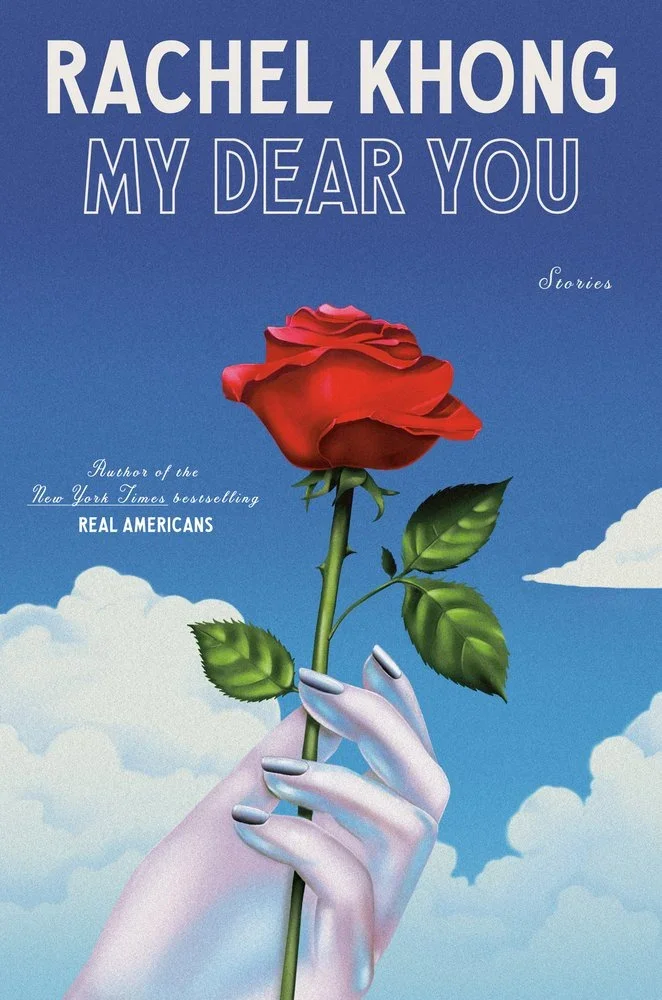
In the tech-saturated information age, the "rational" frequently serves as a veneer for systemic failure. Khong’s work posits that realism—the genre of the status quo—is ill-equipped to challenge an era where algorithmic projection and digitized tribalism dictate human interaction. By introducing speculative variables—a government-mandated pharmaceutical that forces a remapping of race and gender perception, or a ghost-conjuring feline—she does not seek to create science fiction. Instead, she aims for an inversion of the familiar, forcing the reader to interrogate the "faulty logic" of capitalism, institutional racism, and the dehumanization that often passes for standard operating procedure.
The significance of My Dear You lies in its brevity and precision. Khong notes that she treats stories as experimental sandboxes. Where a novel necessitates a certain pacing and adherence to character arcs that readers can track over hundreds of pages, the short story allows for a surgical strike on the psyche. The "wackiness," as she describes it, serves as a high-density delivery mechanism for complex, often contradictory human emotions. By distilling interpersonal dynamics into shorter, more potent narratives, she exposes the fundamental mismatch inherent in human relationships: our persistent failure to see others as they are, rather than as reflections of our own internal projections.
Khong’s critique extends to the tools of modern digital existence. She observes that while digital connectivity was promised as a democratization of the social sphere, it has effectively acted as a catalyst for deeper fragmentation. By fostering a reliance on heuristics and assumptions, platforms encourage a reductive view of the individual. This is the "absurdity" she focuses on—not the fantastical, but the deeply mundane, quiet iterations of institutional and interpersonal bias. She explicitly links this to her own experiences as an Asian woman, where prejudice often manifests not in cinematic, loud confrontations, but in the institutional "afterthought"—the medical professional dismissing a concern, or the industry treating diverse perspectives as seasonal, tethered to awareness months rather than integrated into the literary canon.
From a technical standpoint, the collection functions as a study in dissonance. Khong uses the "ghosts of past relationships" or "visions of heaven" as literal manifestations of internal states. By placing these supernatural elements against a grounded, everyday backdrop, she creates an uncanny valley effect. This is intentional. She argues that the division between the strange and the everyday is a false dichotomy. Whether it is the biological miracle of gestation or the systemic inequality of the billionaire class, the world operates on contradictions that are essentially unexplainable. To write, for Khong, is not to resolve these paradoxes but to provide a framework for navigating them.
For those tracking trends in contemporary literature, Khong represents a shift toward a more skeptical, structurally conscious mode of writing. She rejects the notion that the author’s primary goal is to "make sense" of a chaotic environment. Instead, she positions the work as a companion to the chaos—a way to maintain presence in a world that intentionally obscures its own mechanics. The stories in My Dear You suggest that the only way to remain "human" in a society obsessed with conformity is to embrace the illogical, the personal, and the inexplicable.
Ultimately, the takeaway is not found in the resolution of her plot lines, but in the skepticism they demand of the reader. If the systems we navigate daily are as fragile and illogical as Khong suggests, our reliance on them warrants a more rigorous level of scrutiny. The efficacy of her work lies in its ability to make the reader feel like a participant in a grand, albeit flawed, experiment. The challenge for the reader is to carry that skepticism beyond the page: to identify the "rules" of their own environment and determine which are truly rational, and which are merely the ghosts of a system that has stopped serving its own people.