The Technical Pivot: Nana Kwame Adjei-Brenyah on the Architecture of Auditory Storytelling
For novelists, the transition from prose to musical composition is rarely a lateral move. It is an exercise in structural shedding. When Nana Kwame Adjei-Brenyah—known for the surrealist, high-stakes architecture of Friday Black and Chain Gang All-Stars—decided to pivot to a debut rap album titled The Pisces Sciatica, the primary friction point was not rhythm; it was the abandonment of the "fine-tuned instrument" of prose in favor of something raw and, by his own definition, naive.
In literary circles, authors often treat the page as a heavily curated space where the truth is managed through craft. Adjei-Brenyah suggests that the shift to rap served as a corrective to this, acting as an "empty forest" where he could articulate lived-in trauma that, until now, remained locked away. The technical reality of this shift is not just thematic but methodological. Where short story collection assembly relies on a macro-level thematic flow, the album requires a rhythmic, micro-level precision—a commitment to the syllabic grid that allows no room for the sprawling digressions common in long-form fiction.
The album functions as a case study in hybrid artistic practice, utilizing specific, often high-context references—ranging from Richard Wright to Vince Carter—to construct an identity that intentionally risks alienating a broad audience. For an industry accustomed to mass-market accessibility, Adjei-Brenyah’s approach is a deliberate regression into specificity. "I don’t know how many NBA fans also know Richard Wright," he notes, acknowledging that the dense layering of references is not meant to be deciphered, but to function as a portrait of the creator's own cognitive map.
The technical process of revision in music, as described by the author, provides a stark contrast to the solitary, years-long gestation period often found in publishing. Because vocal performance requires a physical integration—the ability to speak lines without tripping over syllables—the feedback loop between writing and execution is instantaneous. This has produced a "discovery-based" revision model. When he catches linguistic overlaps, such as the accidental connection between "medaling" and "meddling," the medium forces a structural adaptation that would likely be discarded or edited into invisibility in a traditional prose manuscript.
This intersection of mediums raises the question of whether the "preciousness" often found in professional writing inhibits the final output. Adjei-Brenyah’s collaboration with engineer Mike Mitch seems to have fundamentally altered his approach to the editorial process. In the world of music production, where an engineer must audit a track hundreds of times, the intimacy of the edit is absolute. This proximity has, by the author's admission, encouraged him to treat his literary work with less detachment, leading to faster turnaround times on new stories and a greater willingness to share "unmixed demos" rather than waiting for a polished, final draft.
The album’s structure—oscillating between the melancholic, the "sad boy" introspection of tracks like "Best Right Now," and the braggadocio of "And The Miracles"—mirrors the pacing of a short story collection. However, the *application* is fundamentally different. In an album, the "macro" order is dictated by the energy of the user experience, whereas in a collection, it is governed by narrative progression. Adjei-Brenyah treats the tracklist as a playlist, prioritizing the listener's engagement over the sequential development of a plot.
I’m so craft-focused as a writer, but there’s a rawness in my naivete as a rapper.
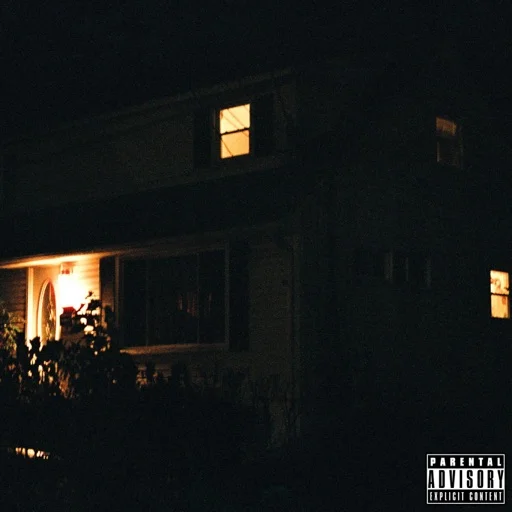
There is a recurring tension in his work between the savior complex of the protagonist and the reality of the artist’s own limitations. The album cover art, featuring residences from his childhood, signals that this is not an expansion of the author’s public persona, but a reclamation of the "inner child" who has been historically tethered to the pursuit of professional validation. The transition to film, which he notes is "sickening" in its intensity, suggests a movement toward even more collaborative, multi-sensory environments.
Ultimately, the significance of The Pisces Sciatica lies in its failure to be a "writer’s album." It refuses to lean on the crutch of literary status, instead forcing the author to prove competence within a new set of constraints. The takeaway here is not about the versatility of the artist, but about the stagnation that results from staying within a single medium’s echo chamber. By subjecting his own voice to the brutal, immediate rhythm of a beat, Adjei-Brenyah has identified the difference between the "curated truth" of the novelist and the "raw truth" of the lyricist.
As Adjei-Brenyah continues to branch into film and other modes of expression, the industry should observe how his reliance on "inner child" therapy and radical collaboration reshapes his prose. If his recent output is any indication, the future of high-impact storytelling will likely rely less on the perfection of the draft and more on the audacity of the pivot. For those who view their own work as a "fixed" craft, the lesson is clear: if the medium allows you to hide behind polish, it may be time to find a new instrument.