The trajectory of an artist’s career is rarely a linear progression of talent meeting opportunity. For Edna Clarke Hall, a prodigy at London’s Slade School of Fine Art, the path was violently diverted by a marriage that transformed a celebrated student of Henry Tonks and Philip Wilson Steer into a recluse at Great Tomkyns, her Essex estate. Hall’s story is not merely one of domestic suppression; it is a case study in how psychological entrapment can manifest as a decades-long creative fixation.
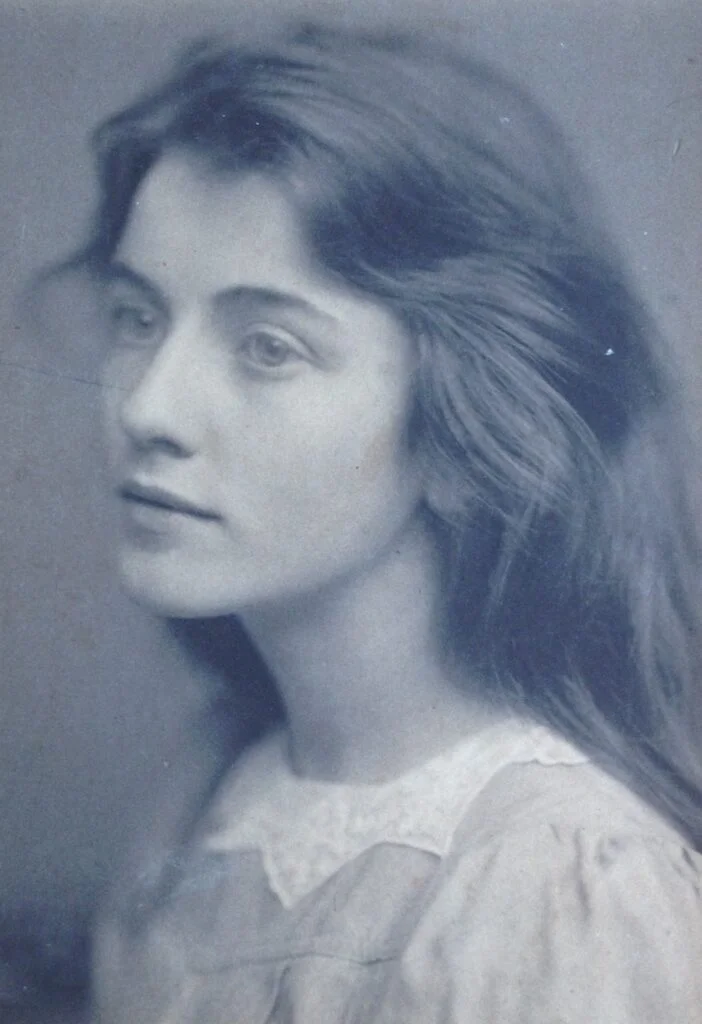
Edna Clarke Hall, aged sixteen, ca. 1895. Photograph courtesy of Abbott and Holder Ltd.
The Anatomy of Displacement
At fourteen, Hall was an insider in the British art establishment, mentored by Tonks and surrounded by future luminaries like Gwen and Augustus John. Her potential was curtailed at sixteen when she wed William Clarke Hall. Her husband, thirteen years her senior, maintained a legal career rooted in child advocacy yet exhibited a pattern of predatory fixation on youth—a cognitive dissonance well-documented by contemporaries like Ernest Dowson and historian Max Browne.
The marriage functioned as a systematic dismantling of Hall’s identity. William Clarke Hall initially signaled support for her work, only to pivot toward enforced domesticity once the marriage was solidified. In her unpublished autobiography, The Heritage of Ages, Hall describes this period with the clarity of a survivor: she was “left standing like a confused child by an unkindness I could not interpret.” Isolated from her creative peers and confined to their Essex home, she found an unlikely outlet in the pages of Emily Brontë’s Wuthering Heights.
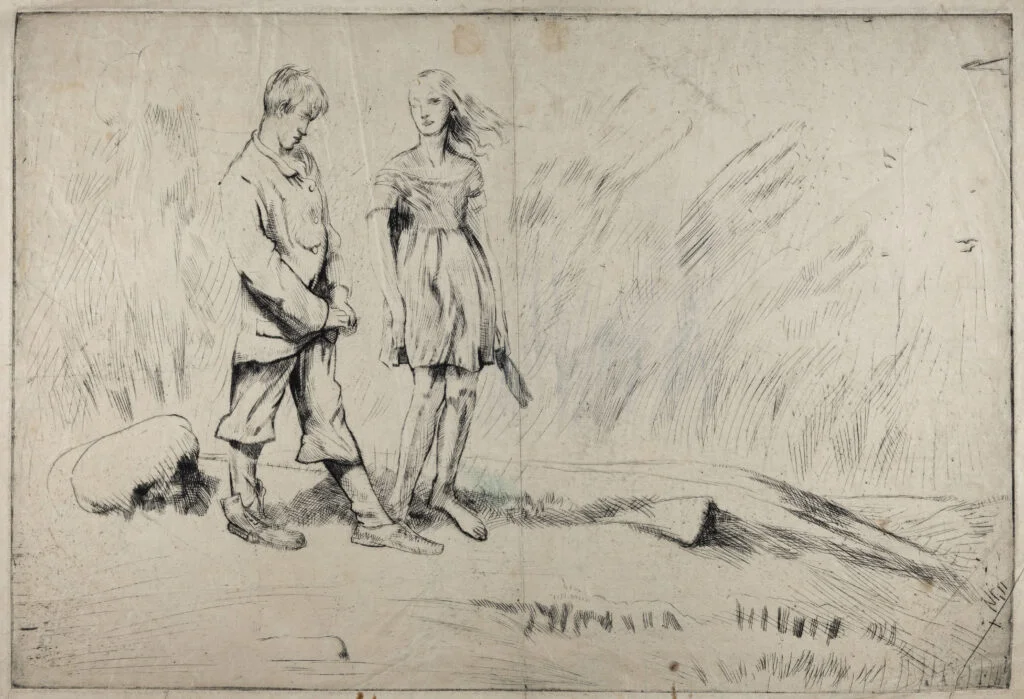
Edna Clarke Hall (1879–1979), Untitled, ca. 1920s, etching. Collection of Richard Clarke Hall, © the Estate of Edna Clarke Hall; photograph courtesy of Richard Clarke Hall/Abbott and Holder Ltd.
Art as Compulsive Manifestation
Hall’s obsession with the novel went beyond literary appreciation; it became an psychological surrogate. She internalized the landscape of Gimmerton as a reflection of her own internal isolation, famously dressing in costume to model for her sketches. The work produced during these years—hundreds of etchings, watercolors, and ink drawings—displays a visceral, almost manic quality. She described these sessions as working "under a spell," a stark contrast to the sterile, polite existence required of her as a lawyer’s wife.
The correlation between her husband’s control and her creative output is absolute. Upon William Clarke Hall’s death in 1932, the primary engine of her compulsion ceased; there are no drawings of Wuthering Heights dated after he passed. The art was not just a hobby; it was a psychological defense mechanism, a way to externalize the volatility of her marriage by projecting it onto the doomed, tortured figures of Cathy and Heathcliff.
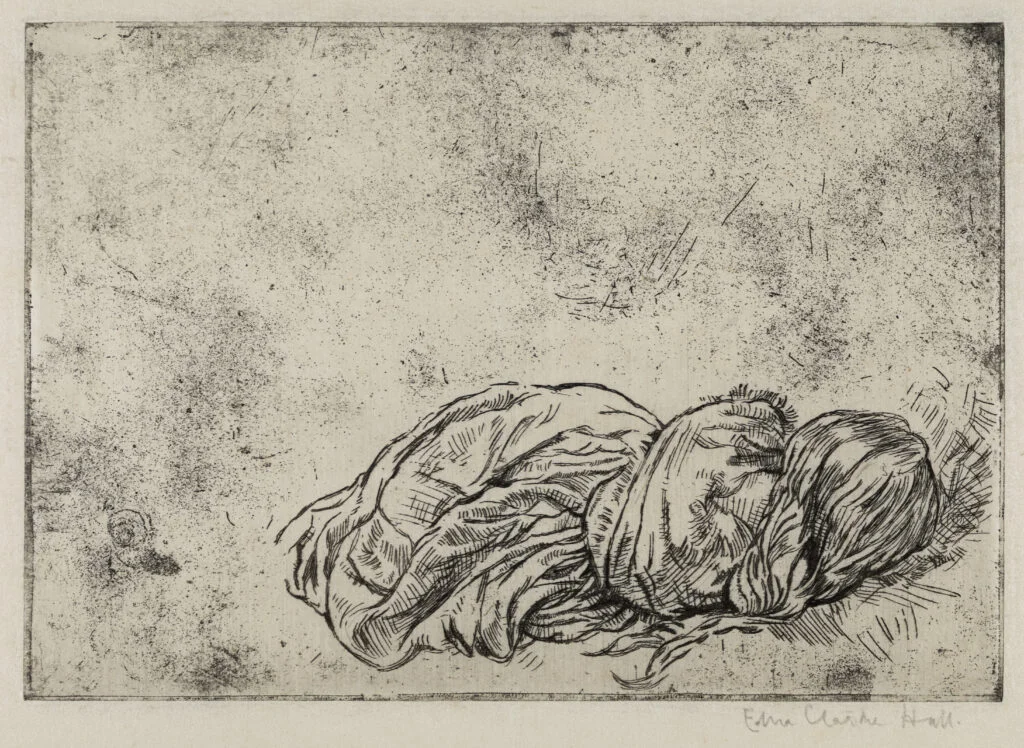
Edna Clarke Hall (1879–1979), Untitled, ca. 1920s, etching. Collection of Richard Clarke Hall, © the Estate of Edna Clarke Hall; photograph courtesy of Richard Clarke Hall/Abbott and Holder Ltd.
The Institutional Afterlife
For decades, the majority of Hall’s output remained marginalized, tucked away in the archives of institutions like the Victoria and Albert Museum and the Ashmolean. It has taken a new illustrated edition of Wuthering Heights to finally provide the connective tissue between her written introspection and her graphic output, pairing thirty of her sketches with Brontë’s text.
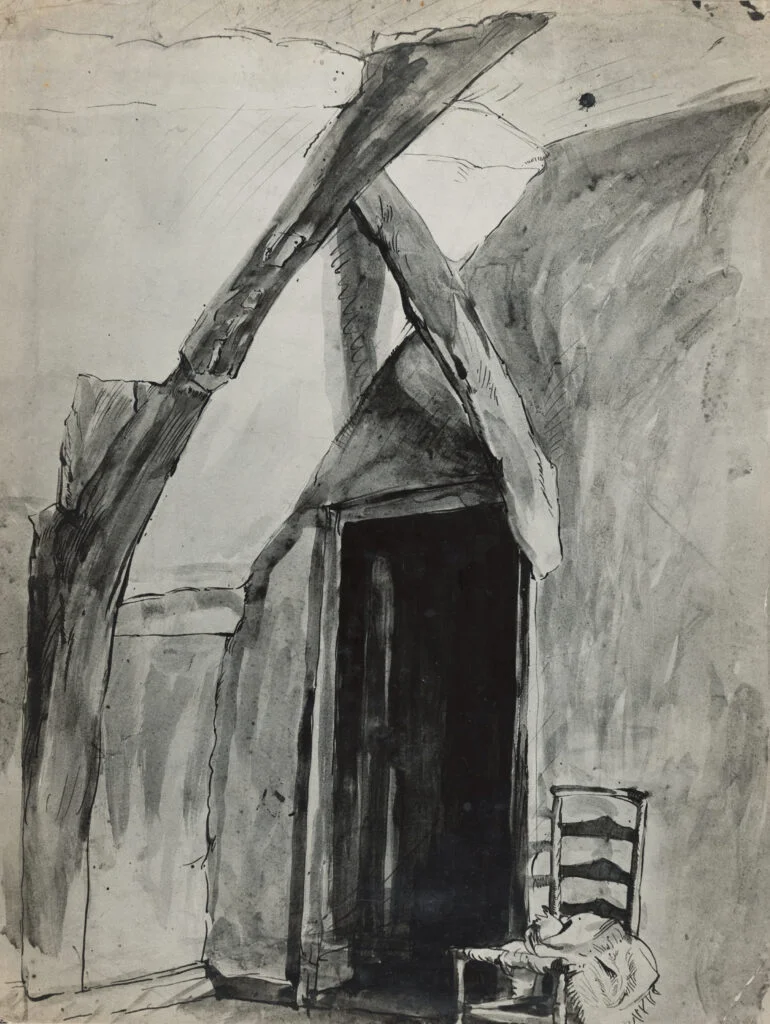
Edna Clarke Hall (1879–1979), Interior, Wuthering Heights, 1909, ink and wash on paper. Private collection, © the Estate of Edna Clarke Hall; photograph courtesy of Richard Clarke Hall/Abbott and Holder Ltd.
The technical dexterity of these works suggests a talent that, had it been allowed to develop outside the vacuum of domestic confinement, might have positioned Hall alongside her most celebrated Slade contemporaries. Instead, she left a legacy of fragmented, obsessive brilliance—a body of work that reveals as much about the stifling nature of early 20th-century marriage as it does about the source material she reinterpreted. As these works emerge from private collections and museum basements, they force a recalibration of how we assess “outsider” art. Hall proves that one can be an insider who is forced into the periphery, turning the constraints of their environment into a canvas for their own psychological liberation.
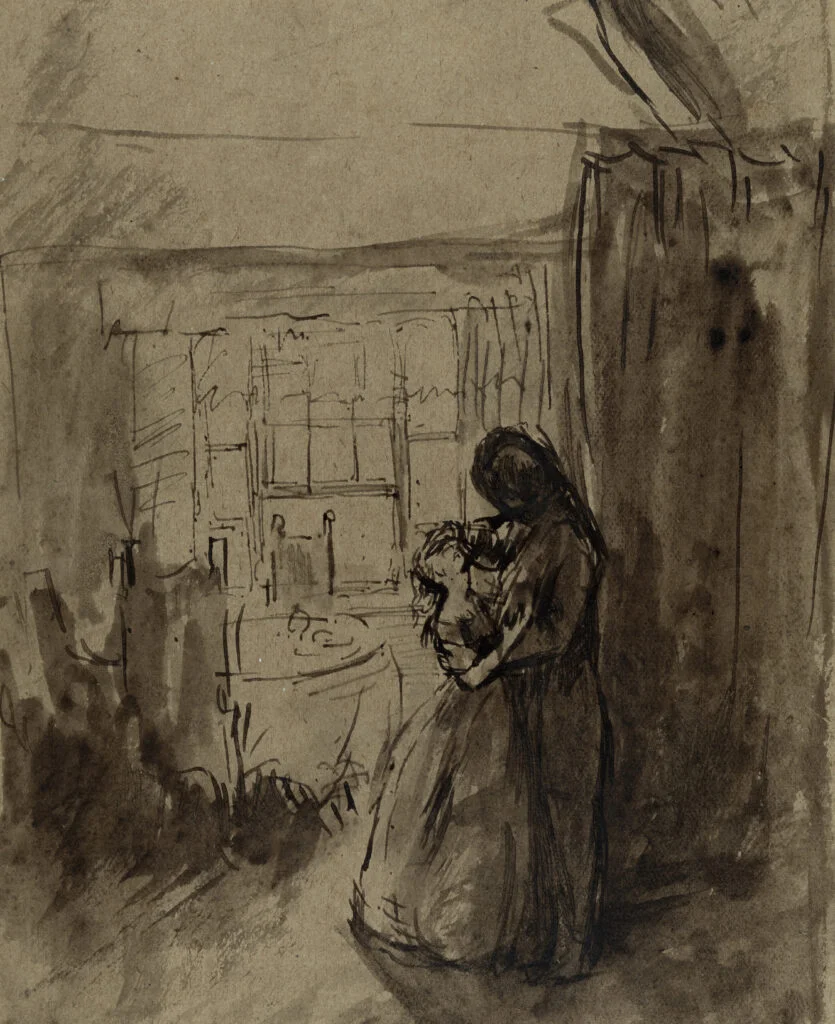
Edna Clarke Hall (1879–1979), Untitled, ca. 1920s, ink and wash on paper. Collection of Richard Clarke Hall, © the Estate of Edna Clarke Hall; photograph courtesy of Richard Clarke Hall/Abbott and Holder Ltd.
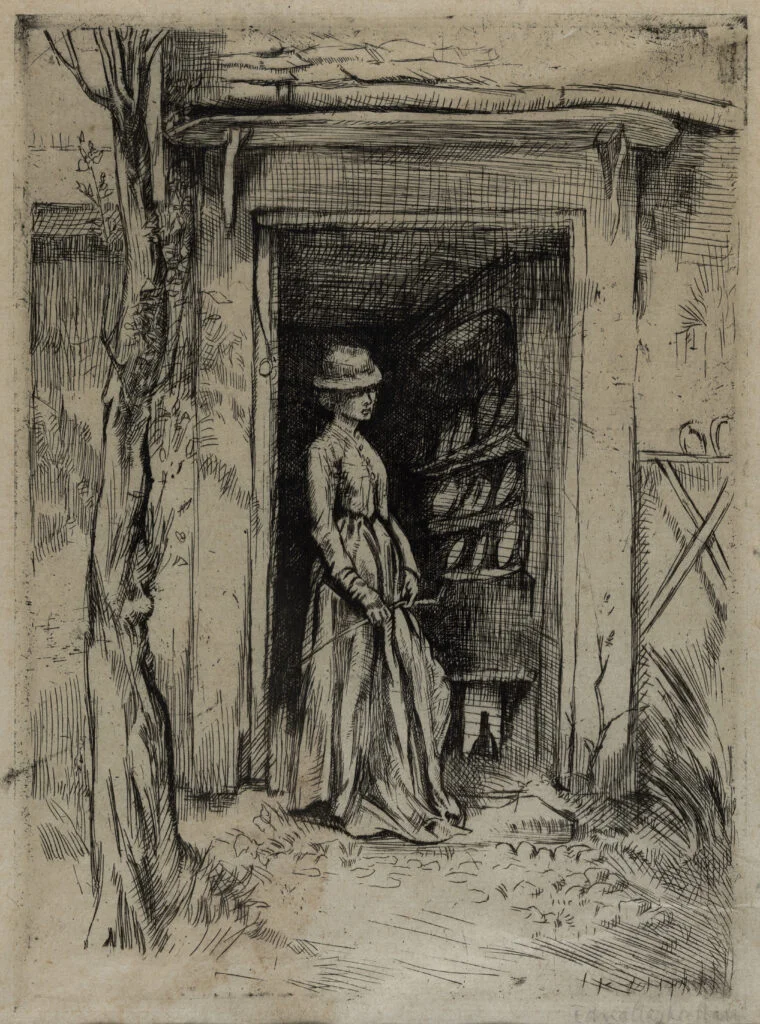
Edna Clarke Hall (1879–1979), Untitled, ca. 1920s, etching. Collection of Richard Clarke Hall, © the Estate of Edna Clarke Hall; photograph Courtesy Richard Clarke Hall/Abbott and Holder Ltd.
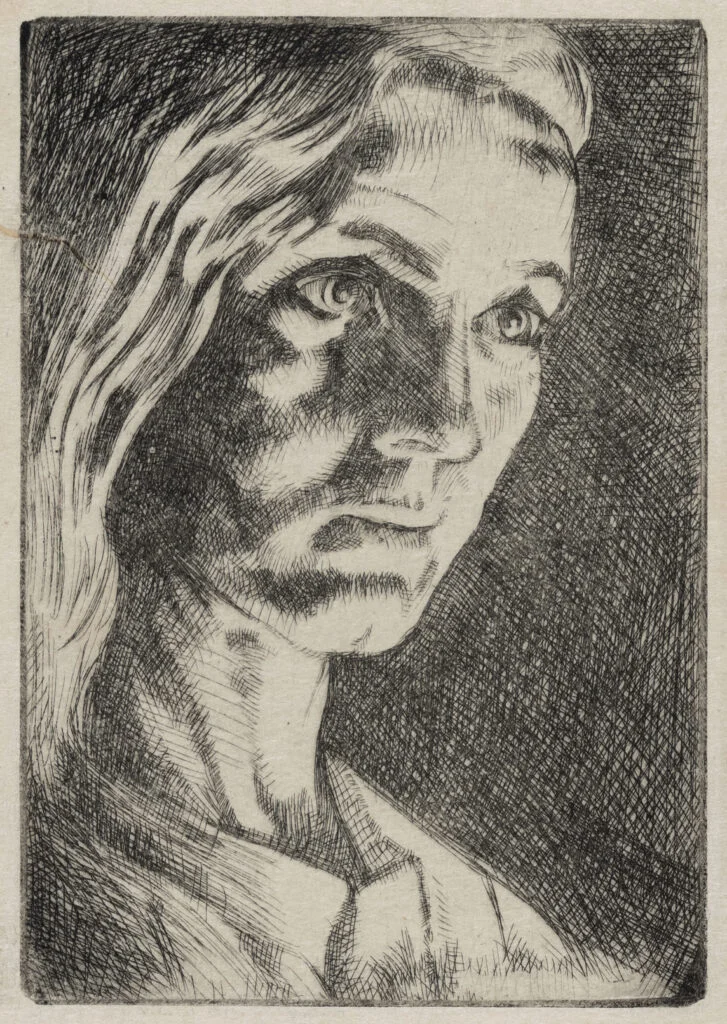
Edna Clarke Hall (1879–1979), Self-portrait, ca. 1910s-1920s, etching. Collection of Eliza Goodpasture, © the Estate of Edna Clarke Hall; photograph courtesy of Abbott and Holder Ltd.
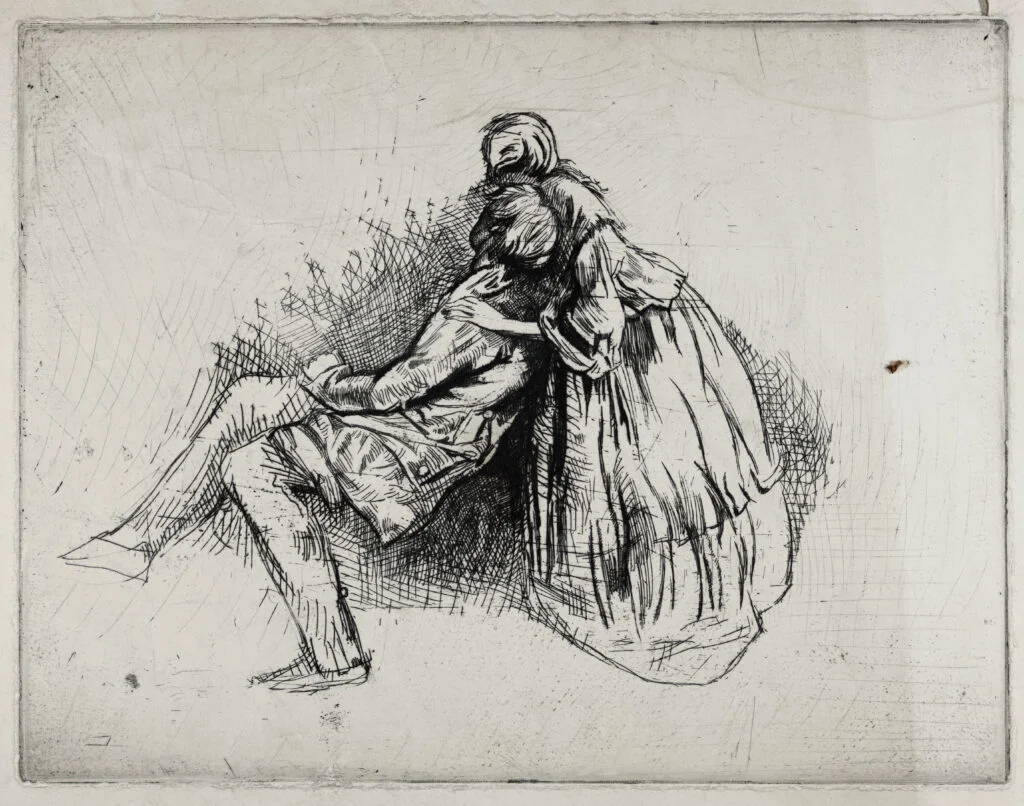
Edna Clarke Hall (1879–1979), Untitled, 1909, etching. Private collection, © the Estate of Edna Clarke Hall; photograph courtesy of Richard Clarke Hall/Abbott and Holder Ltd.
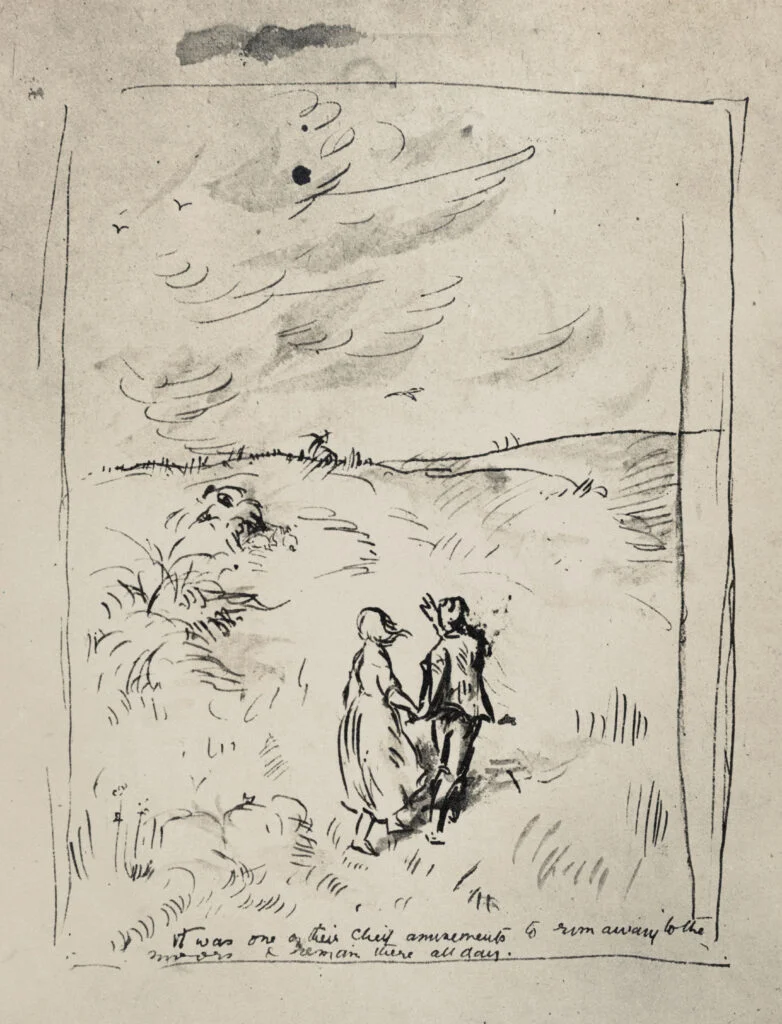
Edna Clarke Hall (1879–1979), Untitled, ca. 1920s, ink and wash on paper. Collection of Richard Clarke Hall, © the Estate of Edna Clarke Hall; photograph courtesy of Richard Clarke Hall/Abbott and Holder Ltd.